Can we find solutions that match the scale of the problems we face?
Nonviolence International believes that in this time of crisis, we must find a way to craft solutions that are capable of responding to the massive challenges before us. Typical delay and compromise politics are not sufficient to the reality of the moment. The time for small ideas is over. As is the time when we can allow our broken system to define our vision. When politicians receive funding from those actively destroying our precious planet, we must find another way to respond to the climate crisis.
The exceptional young leaders of the Sunrise movement have tried a variety of approaches including education, letter writing, public protests, and direct action. They have even engaged in the dangerous often corrupt world of electoral politics. They have found that even after the vast coalition you represent plays a key role in getting leaders into office, they mostly follow. As usual, elected leaders must be pushed to fulfill key promises made during campaigns.
Now brave young people seeking to claim a livable future have begun a hunger strike. Extinction Rebellion UK just asked if this is the most important fortnight in history. They note that previous massive well-publicized conferences have not produced the change we need. We share the sense of urgency and know we will need each other even more after both the upcoming conference and the legislative process underway in Washington, DC fail to grasp the enormity of the moment. These young leaders understand the nature of the crisis we face, know well that US is by far the greatest historical polluter causing climate change, and deserve our active support.
To learn more about each of these leaders and find ways you can help, please see the information below from Sunrise.
See also further explanation of this powerful nonviolent tactic in NVI's online database.
Hunger Strikes
Relay Hunger Strikes
PRESS CONTACT
Nikayla Jefferson
619-961-6080
|
HUNGER STRIKE FOR CLIMATE JUSTICE |
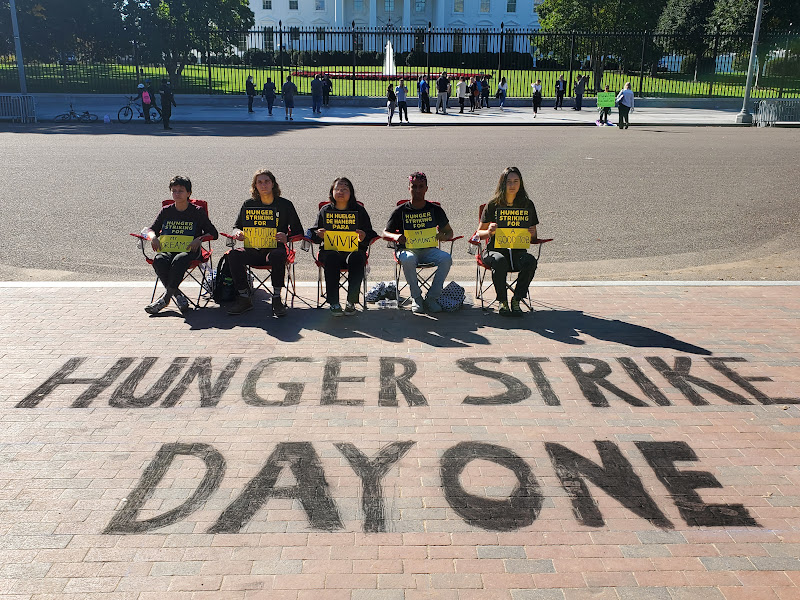
We Demand:
Biden, deliver on your climate justice promises.
Pass the full scope of the reconciliation bill to ensure the United States reduces emissions at least 50% by 2030 while advancing justice and creating millions of new good union jobs.
The bill must include a Civilian Climate Corps, direct investments in public schools, housing, transit, and clean energy to reduce emissions across major sectors and improve our communities. No investments towards fossil fuels.
What can you do?
Write or Call the White House
Go to https://www.whitehouse.gov/get-involved/write-or-call/ to bring our demands and our story directly to the White House.
Call your Members of Congress
Go to CallForTheGND.org to call your Representative and Senators!
Phonebank
You can join an upcoming phonebank hosted by Sunrise Movement. (http://smvmt.org/gnd)
Donate to our GoFundMe
Help us pay for water, supplies, transportation, housing, etc. Please help us out! (https://www.gofundme.com/f/hunger-strike-for-climate-justice)
Share this document (bit.ly/hungerstrike4climate) or the links above with your friends with a personal note!
Hey, there’s 5 young ppl on hunger strike rn for climate change. They’re only drinking water til the gov passes the first part of the green new deal, and it could totally happen. They’re asking ppl to support them. I’m doing [], would u wanna join me?? See here bit.ly/hungerstrike4climate
On Wednesday, our team launched a hunger strike; help amplify by sharing and following on social media:
- Accounts to tag
- Hashtags
- #NoClimateNoDeal
- #NoCompromisesNoExcuses
- #BidenChooseUs
- #HungerStrikeForClimate
- Posts to uplift
- Kidus’s Personal Story (https://twitter.com/HungerStr1ke/status/1451664702585573377?s=20)
- Biden, Fight For Us (https://twitter.com/HungerStr1ke/status/1451292812172042243?s=20)
- Now This News - (https://twitter.com/nowthisnews/status/1451297994112856065?s=20)
- Breaking! We start the hunger strike (https://twitter.com/hungerstr1ke/status/1450831939011764232?s=21)
- Our demands (https://twitter.com/hungerstr1ke/status/1450867540075352064?s=21)
Press
KALW - Youth Climate Activists are on Hunger Strike Outside the White House
Al Jazeera - Climate Activists Go on Hunger Strike near White House
Yahoo News - After Manchin nixes clean energy budget provision, youth climate change activists go on hunger strike
The Guardian - Climate Activists Launch Hunger Strike Outside White House
Teen Vogue - Hunger Strike for Climate Justice Begins in DC
Democracy Now - Climate Activists Start Hunger Strike from White House
The New York Times - Biden Backs Compromise to Win Vast Social Agenda
New Republic - Climate Activists are Going on Hunger Strike
Rachel Maddow Show - It’s Been a Busy Week of Direct Action All Over the Country
Why now?
Joe Manchin is trying to purge climate policy from the $3.5T Build Back Better Act. The most crucial pieces for federal climate action: the Civilian Climate Corps (CCC), the Clean Electricity Performance Program (CEPP), pieces of the GND for Public Housing could be gone if Manchin and his corporate donors get their way. These policies are more than just acronyms – a CEPP means clean air and water. A CCC means jobs and opportunities for our generation. A robust reconciliation package means less human suffering. Joe Biden has the power to make this a reality right now, but has conceded control of the White House, the Democratic Party, and the future of this country to Joe Manchin and his fossil fuel fortune. Now, everything we’ve fought for is on the line.
That’s why on Wednesday, October 20, five brave young people began a hunger strike in the fight for what we need. It’s all hands on deck now and we need you in this fight.
We must pass the full scope of this bill or we will spiral deeper into the climate crisis. The urgency of now cannot be understated: This could be our last chance to pass federal climate policy for the rest of the decade and we won’t back down without a fight.
The time is now and we have nothing to lose. No climate, no deal.
|
WEDNESDAY 10/20: HUNGER STRIKE LAUNCH |
Starting Wednesday morning outside of the White House, five young people will begin a hunger strike until Joe Biden and Democrats pass the full scope of the Build Back Better Act to combat the climate emergency. Our names are Kidus, Abby, Paul, Ema, and Julie and we are risking our bodies to demand Democrats deliver on their elected climate commitments, and pass the first pieces of the Green New Deal for climate justice.
Why a hunger strike?
The stakes of this moment are greater than our lives: the United States is at a crossroad on climate, and the Democrats have a choice between mass human suffering or mass human survival. Hunger strikes and fasting are tactics that have been used by social movements throughout history to draw attention to certain issues, underscore the moral authority of participants and put pressure on key targets. We hope our hunger strike can appeal to Joe Biden, bring more people into our movement and emphasize what is at stake -- future life on this planet -- in this bill.
MEET THE STRIKE TEAM |
Kidus, 26, Dallas, TX
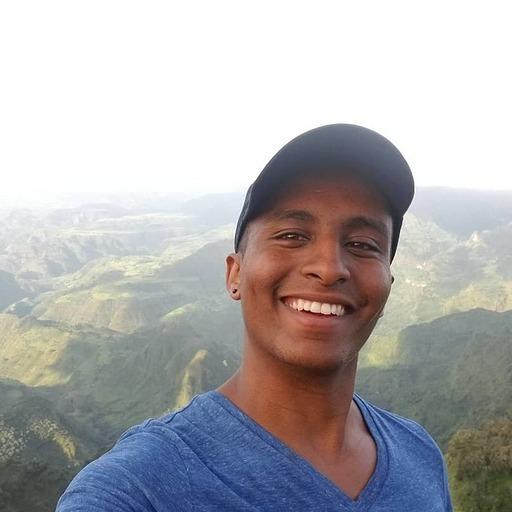
I’m hunger striking because I believe we can win. I’m fighting for my mom who is an in-home caregiver, the people in Texas who died during the TX Freeze, and my future children. I’m fighting for a Dallas that invests in green public housing in immigrant neighborhoods like my first home, Vickery Meadow. I’m going on a hunger strike because we all deserve clean air, good jobs, and a livable future. I’m striking for everyone I've ever loved and I won’t back down until Biden invests in us, our futures and his own agenda. Twitter: @Kidus_GirmaB Tiktok: kidusgirma460 Instagram: kidusgirma460
Paul Campion, he/him, 24, Chicago, IL
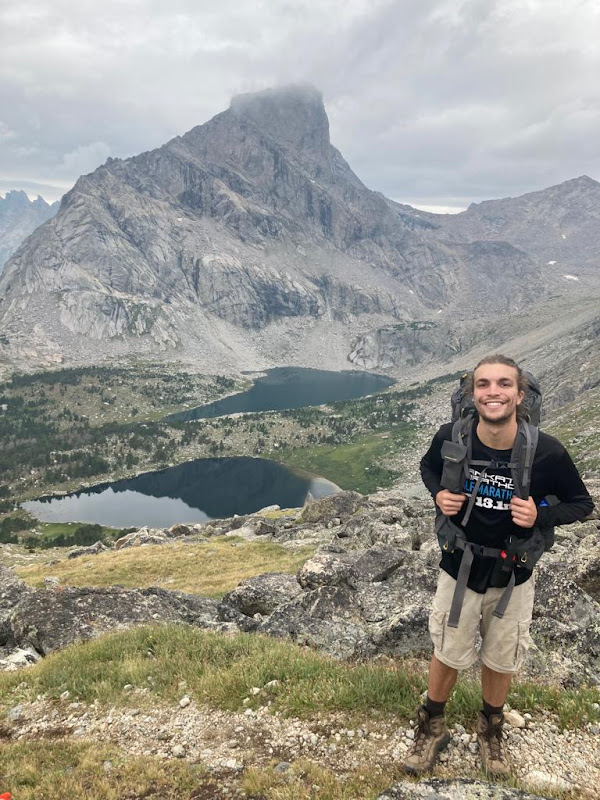
On Saturdays with my neighbors I pack and deliver groceries to other neighbors. On warm summer nights, I love to bike along Lake Michigan looking at the bright Chicago lights and the stars that poke through. I’m going on hunger strike because I want to live a full, beautiful life. I want to have carefree days where I can play in the park with my future children and evenings when I can invite friends and family over for dinners, a bonfire, and singing. I’m going on hunger strike to remind Joe Biden of the promise he’s made to tackle the climate crisis and the responsibility he has to follow through -- to not shrink & compromise away my generation’s future. I’m striking to remind him that it’s alway worth it to do all that we can to prevent pain, suffering, and death. I’m striking to remind him that love ought to show itself in deeds more than in words. He must deliver strong federal climate legislation, paid family leave, and the full scope of his Build Back Better agenda so that I and the people I love can live full, beautiful lives.
Twitter: @_paulcampion
Ema, she/her, 18, Santa Rosa, CA:
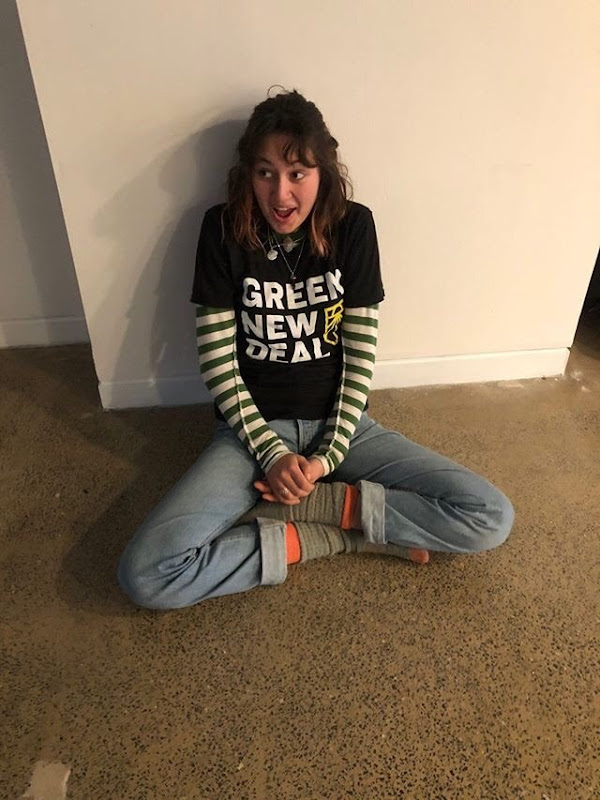
I’m going on a hunger strike because I am terrified about what the climate crisis is doing and will do to the people and places I love. This summer I marched hundreds of miles across California to demand action that meets the scale of the climate crisis. But paid-off politicians are refusing to take my generation seriously, despite wildfires spreading and our homes burning. We need to invest boldly in climate now, for my family and so that I have a chance at a livable future. Insta: @ema.govea
Julia Paramo, she/ella, 24, Dallas, TX:

I’m hunger striking for my Tejano community. My community has to rely on itself because the government currently won’t fight for us. I will fight for my people. Mi comnunidad looks like community gardens, urban farming, and working people who live in food-deserts putting in hours to only get cents back. I want a future where I can laugh and dance with my friends without the fear of being outside. So, I’m striking to carry on la lucha of my ancestors, for my parents who came to this country with false promises of the “American Dream,” only to fight tooth and nail out of poverty to barely land in the working class. We have abused mother-nature for too long, our communities are hurting. I do not want this earth to die the way I already see my neighborhoods suffer everyday. I’m hunger striking because Joe Biden owes my community what he ran on. To show Biden the pain an entire generation faces if he and his administration fail to deliver on their promises.
Insta: @julieahp
Twitter: @julie_ahp
Abby Leedy, she/her, 20, Philadelphia, PA:
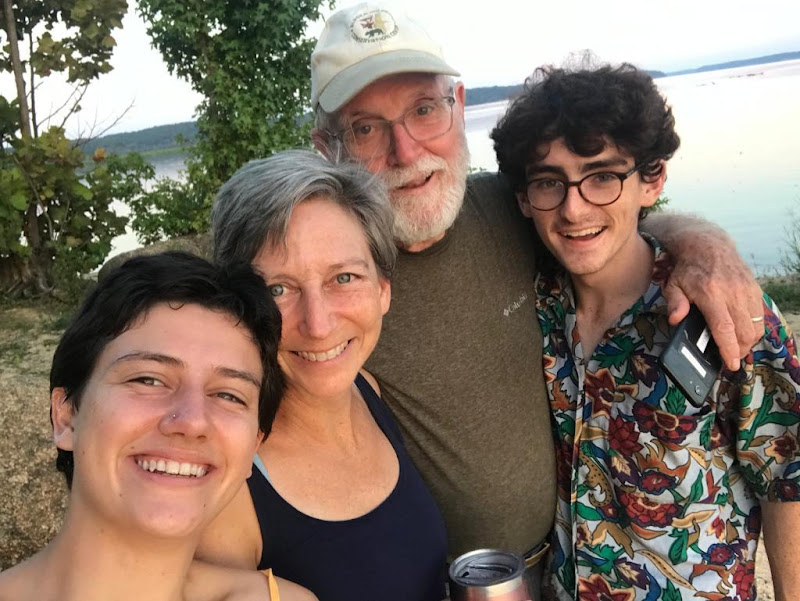
I want to keep living in West Philly. I want to have a home here one day, with my mom, my wife and my kids. I want to have a garden and go to church every week. I’m hunger striking because that future means everything to me, and I’ll risk everything I have to make it real. I believe we can stop climate change, that there’s a future where Philly is above water, where my family can live with dignity, and peace, and joy. I don’t have millions of dollars to pay our politicians off to make that happen. I just have my life. Instagram: @abby.leedy
Tiktok: @notabbyfromqueereye
Check out this short powerful video from Greta Thunberg
Latest posts
The Power of the Powerless:
Nonviolent Resistance Begins with Ordinary Acts
In the midst of cascading global crises - war, repression, climate breakdown, and democratic backsliding, the world briefly paused this week to listen to Canada’s prime minister’s speech at the World Economic Forum, in Davos. Mark Carney opened his speech with an unexpected story: The Power of the Powerless.
The reference comes from a 1978 essay by Czech dissident and playwright Václav Havel, who would later become president of Czechoslovakia. It remains one of the most important texts on authoritarianism and nonviolent resistance. What makes his analysis enduring is not simply its critique of repression, but its clarity in explaining a question many people still struggle to articulate: why do authoritarian systems persist even when few genuinely believe in them? Havel’s answer is both unsettling and empowering: because society participates in the lie, not necessarily out of conviction, but out of habit, fear, and self-preservation.
Authoritarianism is sustained not only by force, but by conformity. Authoritarian regimes are often imagined as systems held together exclusively by violence, and Havel does not deny the role of coercion, but he argues that the more efficient form of control is subtler: fear that becomes routine. Such systems function because millions of ordinary people quietly adjust their behavior to what is expected of them and, over time, this compliance becomes normalized. People learn how to perform loyalty without believing it. In this sense, authoritarian power depends less on ideological devotion and more on daily participation in a collective performance. This is what Havel calls “living within the lie.”
One of the essay’s most famous examples is that of a greengrocer who places a political slogan in his shop window, written “Workers of the world, unite!” The key point is not the slogan itself, but why it is displayed. The greengrocer does not post it because he believes in it. He does so to signal that he understands the rules of the game. The sign becomes a silent message: I am obedient. I will not cause trouble.
Here, Havel exposes a fundamental weakness of authoritarian systems: they rely on these visible rituals of submission. Such gestures reassure the regime and society that everyone is still playing their assigned role. So Havel asks a deceptively simple question: What happens if the greengrocer removes the sign? He does not topple the regime. But some things do change:
- the ritual is broken
- the illusion of consensus cracks
- the system’s dependence on performance becomes visible
And once that happens, others begin to see that the system is not inevitable.
“Living in truth” as Nonviolent Action
For Havel, the real power of the “powerless” lies in choosing to “live in truth.” This is not a moral slogan, but a practical decision to stop reproducing messages one does not believe, to refuse participation in the lie that sustains the system. These acts may appear small. That is precisely why they are powerful. Nonviolent resistance does not always begin with mass protests or dramatic confrontation. Often, it begins with:
- a worker who refuses to repeat propaganda
- a teacher who teaches honestly
- an artist who creates despite censorship
- a journalist who documents reality
- a neighbor who protects another
- a community that organizes itself
To live in truth is a form of nonviolent direct action - one that interrupts automatic obedience. When ordinary people withdraw their participation from the daily theater of obedience, slogans lose their power, fear loses its monopoly, silence no longer signals consent, and truth begins to circulate again. From a nonviolent perspective, political change often emerges not as a clash of force, but as a crisis of obedience.
Why The Power of the Powerless Matters Today
Havel also points toward a strategy deeply aligned with contemporary nonviolent movements: the creation of parallel structures: spaces of social, cultural, and civic life that exist beyond the regime’s control. Rather than waiting for a single moment of rupture, these initiatives build long-term resilience:
- independent cultural spaces
- community networks
- alternative education
- solidarity economies
- independent media
- civil society organizations
Often, repression does not arrive only as open violence, it appears as normalization: cynicism, self-censorship, isolation, and the belief that “nothing can be done.” Havel’s essay offers a crucial reminder:
Power does not reside only at the top.
Power is embedded in daily life.
And so is the possibility of change.
When people choose to live in truth, they create the conditions authoritarian systems fear most: a society that begins to recognize its own agency. Havel shows that obedience has mechanisms. So does resistance.
Nonviolence, in practice, is the collective refusal to sustain a lie as a form of governance.
It is the patient reconstruction of public life through truth, solidarity, and dignity.
History does not change only when people seize institutions. Often, it changes when people decide, together, to stop performing for power.
Dear friend,
This year we invite you to re-read Dr. King’s Nobel Peace Prize acceptance speech, (or you can watch it on here).
“I conclude that this award which I receive on behalf of that movement is a profound recognition that nonviolence is the answer to the crucial political and moral question of our time – the need for man to overcome oppression and violence without resorting to violence and oppression…. we will know that we are living in the creative turmoil of a genuine civilization struggling to be born…I refuse to accept the cynical notion that nation after nation must spiral down a militaristic stairway into the hell of thermonuclear destruction. I believe that unarmed truth and unconditional love will have the final word in reality.”
Despite making much progress in alleviating racism, sexism and reducing global poverty, we see violence and injustice growing in wars and occupations that destroy civilian life, in places like Palestine, Sudan, Western Sahara, Burma, Ukraine, Uganda, and the Congo. The world has surpassed 100 million refugees, as militarism and war have accelerated.
We see governments across the world suppress dissent and weaken human rights in the name of “security.” Racialized police violence continues. Mass incarceration that destroys communities. Economic inequality is growing while basic needs go unmet. Voting rights are under attack. Protest is criminalized. Migrants are treated as threats rather than human beings.
In the United States, the home of Dr. King, the US government is abetting genocide, attacking constitutional and international laws and institutions, and throwing the world over the cliff into climate chaos, all for the sake of transferring vast wealth and power to the few.
Nonviolence International exists because we refuse to accept this as normal.
Nonviolence is harder than violence. We are not going to kill or threaten our way to a just and sustainable future. We must use persuasion, nonviolent coercion, the rule of law, global cooperation and governance in order to survive and thrive. And we must bring on board the huge segments of humanity who succumb to greed and cruelty and elect abusive leaders out of fear or coercion.
Nonviolence is a way of resisting violence without becoming it.
It is organized, courageous, and disciplined. It is about telling the truth, confronting power, and standing with those who are most impacted.
Dr. King understood that nonviolence demands commitment. It demands action. And it demands a willingness to be uncomfortable for the sake of justice.
Following Dr. King’s example, we ask you to write or video record your own speech on nonviolence! You can write for the world, but we ask that you do it to your kids, your community, and/or your country and in your native language.
We will help you publish it on our website or tag / collaborate us on Instagram and Facebook!
The arc of the moral universe does not bend by itself. It bends when people choose to act.
Thank you for walking this path with us, today and every day.
In solidarity,
Michael Beer & Sami Awad, Co-Directors
P.S. Register for our upcoming webinar: Beyond Political Illusions: What This Moment Demands of Us, on Jan 21, at 10AM ET / 5PM Jerusalem time. We will have a powerful panel, including Jonathan Kuttab, Huwaida Arraf, and Jeff Halper.
This Webinar on January 21, at 10AM ET and 5PM Jerusalem time, entitled Beyond Political Illusions: What This Moment Demands of Us is a strategic conversation bringing together Jonathan Kuttab, Huwaida Arraf, and Jeff Halper. Building on earlier discussions that focused on NVI’s book “Beyond the Two State Solution” this webinar responds to the current reality of genocide, escalating violence, and deepening impunity across Palestine. Our guests will clarify what international law and moral responsibility require of us now to manifest a new society committed to nonviolence, justice, equality, and the dignity of life. Register here!

Goals:
- Support Jeff Halper’s 1 state campaign
- Encourage worldwide book groups around Jonathan’s book
- Clarify the political reality in Palestine and move beyond dominant political frameworks that have collapsed
- Explore what international law, nonviolent action and moral responsibility require of individuals and movements
- Challenge all the existent political frameworks and question how individuals and movements can actually push for alternative frameworks to be put in action
Nonviolence Must Prevail in Iran
As we write this, the people of Iran are demonstrating in the streets of their cities and towns for the last 3 weeks.. They are calling for change and demanding to be heard, despite the violence they are facing from their own government — the death toll may be over 2000 people. The world needs to understand what is happening and why we must respond with urgency and wisdom.
What Is Happening in Iran?
In late December 2025, shopkeepers in Tehran closed their stores. These were not political radicals,these were ordinary business owners who could no longer survive. The cost of food had risen dramatically, after Iran's currency, the rial, lost nearly half its value in 2025. What began as protests about the economy quickly became something much larger. People across Iran, students, pensioners, young people, merchants, took to the streets. They are now calling not just for economic relief, but for fundamental change in how their country is governed. The protests have spread to at least 185 cities. Demonstrations have erupted on university campuses. The chants in the streets express deep frustration: "Death to the Dictator" and "Neither Gaza nor Lebanon, My Life for Iran."
This is not the first time Iranians have risen up. Many remember the Woman, Life, Freedom protests in 2022 after Mahsa Amini, a 22-year-old woman, died in custody after being arrested for not wearing her hijab "correctly." Those demonstrations were met with brutal force—tear gas, mass arrests, and live ammunition. Hundreds died and thousands were imprisoned, but Iranians now state that the morality police are less visible in many urban areas, and many women are openly foregoing the veil without immediate crackdowns.
But the roots go deeper. For decades, Iranians have lived under a system where one man, the Shah Pahlavi, and then the Religious Supreme Leader Ayatollah Ali Khamenei, holds ultimate power over all major decisions. Elections happen, but real power remains concentrated in an unelected official. Young Iranians, who make up a large portion of the population,see no future for themselves. They watch their government spend money supporting armed groups in other countries while they struggle at home. They see corruption, mismanagement, and their voices ignored.
The government blames Iran's economic problems on international sanctions—restrictions placed on Iran by other countries, particularly the United States. While sanctions have certainly contributed to economic hardship, Iran's leaders have begun to admit that their own governance failures share responsibility. President Masoud Pezeshkian, elected in 2024 on promises of economic reform, acknowledged this reality even as the protests spread.
The Violence We Condemn
We are deeply concerned about active violence from all sides. Some protesters have thrown stones and burned government buildings. Government armed actors have been killed. We understand the rage that drives such actions, but we believe that sustainable democratic change comes through disciplined, nonviolent resistance.
Our greatest concern, however, is the violence perpetrated by the Iranian government. The state possesses a complete monopoly on weapons—guns, tear gas, riot control equipment, and the entire security apparatus. Reports indicate that hundreds of protesters have been killed, many shot at close range with live ammunition. Thousands have been arrested. Iran's attorney general has warned that protesters could face charges carrying the death penalty.
The government has shut down internet access in many areas, cutting Iranians off from the outside world and making it difficult to document what is happening. In 2025, Iran executed at least 1,500 people—the highest number in nearly 40 years—as part of what appears to be a deliberate strategy to instill fear. As adherents to Islam, a religion espousing peace, this violence against your own people is haram and unacceptable.
We call on the US and Israel to stop their attacks and continued threats of bombing and regime change. Some desperate Iranians have unwisely called for foreign armed intervention hoping for some miracle. This is more likely to increase government repression.
International sanctions, particularly those imposed by the United States, have for the most part devastated Iran's economy. These sanctions fall most heavily on ordinary Iranians—the same people now protesting in the streets. Sanctions make food more expensive. They restrict access to medicine. They destroy jobs and opportunities. In effect, the international community is punishing the Iranian people for the actions of a government they did not choose and cannot change through normal democratic means.
What the World Must Do
The United States and the international community must lift economic sanctions on Iran. Sanctions strengthen authoritarian governments by giving them an external enemy to blame, by forcing citizens to depend on the state for survival, and by creating a siege mentality that makes reform more difficult. Lifting sanctions would empower the Iranian people. It would improve their economic conditions and give them breathing room to organize and demand change. It would remove the government's favorite excuse for economic failure. And it would demonstrate that the international community stands with the Iranian people, not against them. A best outcome would be for the US and other nations to pay reparations for unwarranted suffering. The US and the UN should call for and enforce a Nuclear Weapons Free Middle East (West Asia).
A Nonviolent Path Forward
We call on the Iranian government to recognize the legitimate grievances of its people, and to engage in dialogue and compromise rather than violence. When a government responds to peaceful protest with bullets, it reveals its own weakness and desperation.
The best outcome we can envision is a referendum on Iran's constitution and genuinely free elections where Iranians can choose their own path forward. The current constitution concentrates power in the hands of unelected religious authorities. The previous constitution did so with an unelected monarch.
Iranians deserve the opportunity to decide what kind of country they want to live in.
What matters is that the Iranian people are the ones who determine their future. Not foreign governments, not military intervention, not external pressure. The people themselves, through their courage and their commitment to justice. We have witnessed people power transform nations—from the Philippines to Poland to Chile to South Africa. We have seen ordinary citizens, armed only with their conviction and their willingness to stand together, overcome seemingly invincible authoritarian systems. The path is never easy. The cost is often high. But change is possible.
Our Message to the People of Iran
You are not alone. The world sees you and our courage inspires us. Your determination to build a better future for yourselves and your children gives us hope.
As part of developing any nonviolent strategy in any situation, certain issues are important to take into account. We urge you to remain disciplined in your protests. We understand that the government uses violence out of desperation, but we encourage Iranians to continue to use measures that sometimes lowers the violence and in some cases improves effectiveness:
- Protest primarily during the day time.
- Invite all people, including women, elderly and children to participate.
- Support the creation of a national network of Mothers and Families of the Martyrs.
- Video record everything.
- Denounce attacks on mosques or Islam, even though many see that the religion has been corrupted and misused by state power.
- Look to the medical community for emerging and credible alternative leadership.
- Build mutual aid networks
- Use of non-cooperation techniques such as boycotts and merchant strikes.
- Use of tactics dispersed over a large area.
- Build unity with the diaspora in spite of its extreme elements.
Nonviolent resistance is not passive, it is strategic. It builds broader support, both within Iran and internationally. It withdraws support for the pillars of power, particularly if society uses tax resistance and general strikes.We know that many of you are feeling desperate and wanting revenge for the suffering. But feelings and violent revolution without modern weapons will likely not achieve your goals. You are welcome to get more ideas on possible tactics from our catalogue of 346 tactics in our huge global database and also explained in our Farsi language downloadable book, Civil Resistance Tactics of the 21st Century.
To the international community: Do not abandon the Iranian people in their hour of need. Sanctions are not solidarity. Lift the economic restrictions that make their lives harder. Support their right to determine their own future. And make clear that the world is watching how their government responds.
The road ahead for Iran is uncertain. But in the streets of Tehran, Isfahan, Tabriz, and hundreds of other cities, the Iranian people are writing a new chapter in their long history. They are reclaiming their voice and demanding their dignity. They are showing the world that the human spirit cannot be crushed, no matter how heavily the boot presses down.
History will remember this moment. Let us ensure that history records not just the suffering, but the courage. Not just the violence, but the resistance. Not just the crisis, but the possibility of transformation. The people of Iran are crying out for justice. The question is whether the world will listen—and whether we will respond with wisdom, compassion, and solidarity.